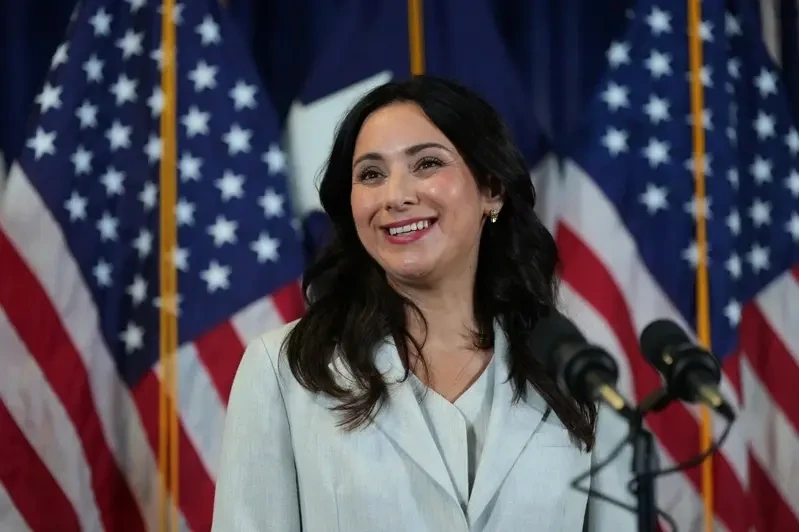
A newly elected official in Texas has called for a pause on the construction of new data centers, urging that development only proceed once regulations are in place to protect community interests and address concerns regarding water, electricity, and costs. Across the United States, voters and local ballot initiatives have also shown a growing inclination toward restricting data center development.
Gina Hinojosa, an official-elect in Texas, stated on Thursday that data center development should be halted until legal protections for local residents are established. Texas had been on track to surpass Northern Virginia by 2030 to become the world’s largest data center market; the industry is now closely watching what conditions might be imposed on future projects.
In an interview with CNN, Hinojosa noted that many data centers are being built in rural areas, yet local residents currently lack adequate legal safeguards. She argues that communities should have a voice in the process—participating in decisions about whether such facilities should be built and how they should be operated once established.
Texas, with its abundant energy supply, relatively affordable land, and business-friendly policies, has attracted a surge in data center construction. However, local residents worry that these projects will drive up electricity costs and place an additional strain on water resources. Ahead of the election, the state’s Republican governor, Greg Abbott, ordered a pause on connecting new data centers to the power grid, pending a comprehensive review of such projects.
While the Trump administration has prioritized the expansion of data centers, concerns among local residents regarding electricity and water usage have become part of the broader “cost of living” debate in the election. According to data from the ad-tracking firm AdImpact, more than $380 million was spent on television advertisements mentioning data centers during the election campaign—with Democrats outspending Republicans by more than three to one.
This opposition transcends party lines. An Associated Press survey of voters found that approximately three-quarters of Americans oppose the construction of new data centers in their own communities, though only about a quarter consider AI-related data centers a key factor in their congressional voting decisions. Furthermore, among local ballot initiatives tracked by the consultancy Redbud Consulting, 44 out of 45 completed votes resulted in the passage of restrictive measures.
According to statistics from the research project “Data Center Watch,” 32 of the 34 governors-elect identified by the Associated Press support stricter regulation or limitations on data center development—with 12 of them even favoring outright bans or moratoriums. Amy Acton, the governor-elect of Ohio, has also pledged to block projects that fail to meet specific standards.
Moving forward, the industry faces critical questions regarding water and electricity consumption, who should bear these costs, and the extent of local residents’ decision-making power. David Crowley, the Democratic governor-elect of Wisconsin, told the Associated Press that his administration is considering requirements for developers to disclose more information about their water and power usage, secure community support, and ensure that energy costs are not passed on to utility ratepayers or taxpayers. On Thursday, OpenAI also called on governments at all levels to establish clear, definitive rules.
Morgan Stanley views the gubernatorial election in Texas as the most significant electoral outcome for data center development. If individual states adopt divergent regulations, the construction of data centers in the U.S. may increasingly concentrate in states that remain open to new projects.